
Portfolio proof
Digital Marketing Portfolio Examples Beginners Can Build Without Clients
You do not need a client before you can show marketing ability. You need a real problem, a clear deliverable, and proof of your thinking.
Direct answer
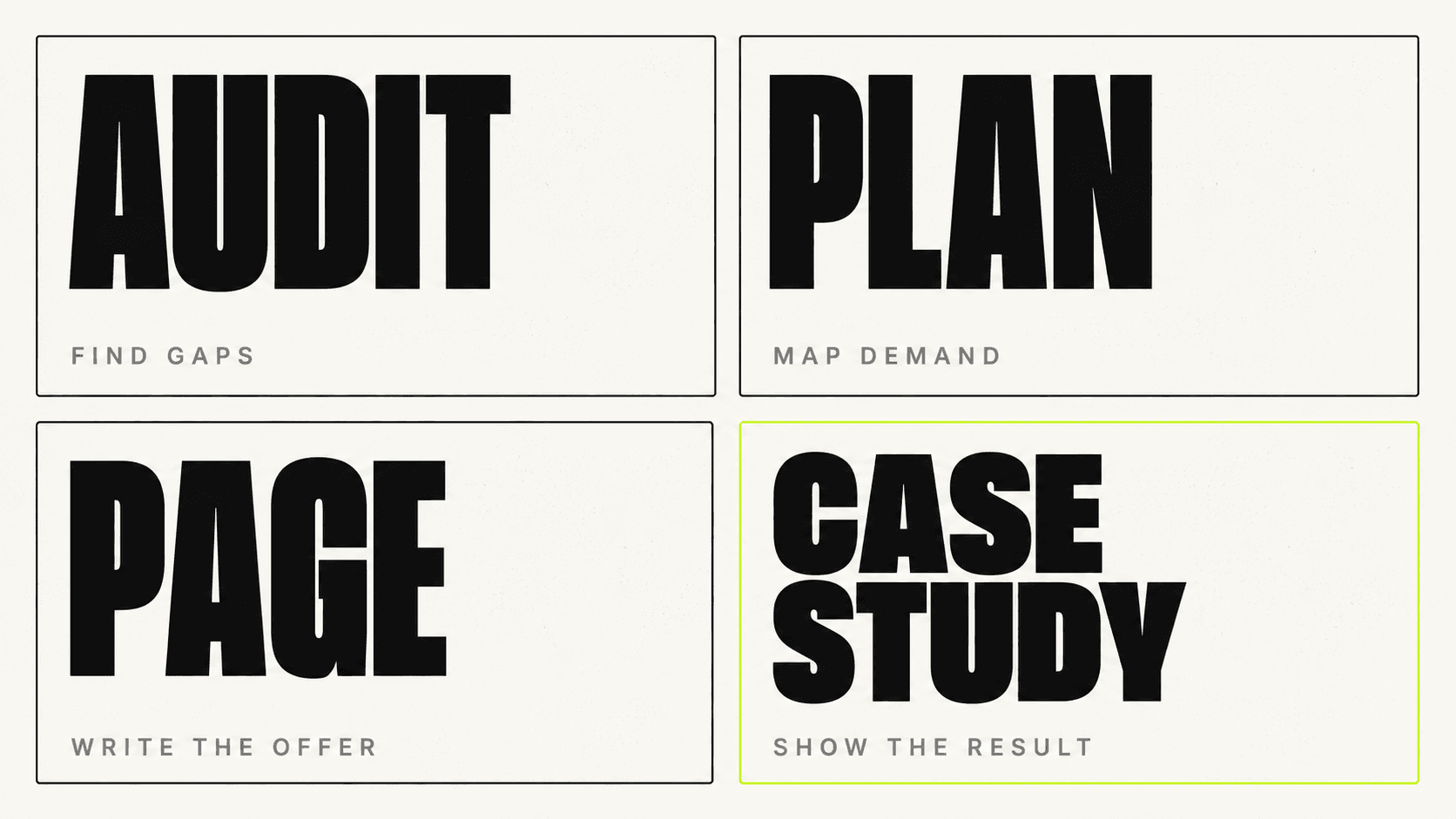
A beginner digital marketing portfolio should show practical work a recruiter or client can inspect quickly. The strongest examples are not fake brand moodboards. They are specific deliverables: an SEO and AI-visibility audit, a keyword and content plan, a landing page rewrite, a 5-email welcome sequence, a small paid campaign brief, an analytics measurement plan, and a case study that explains the decisions behind the work. Each piece should include context, the problem, the recommended action, and the metric you would use to judge success. If you do not have clients yet, choose a public website, local business, creator brand, nonprofit, or your own project and build a respectful speculative improvement. Make it clear that it is practice work. The goal is to prove how you think, not to pretend you produced results you did not produce.
Key takeaways
- A portfolio should show finished deliverables, not just certificates.
- Use real public examples, but be transparent when work is speculative.
- Every portfolio piece should include context, decision, output, and measurement.
- A case study is the container that makes separate assets feel credible.
Who this is for
- Beginners applying for internships or entry-level roles.
- Freelancers who need proof before pitching.
- Students who want portfolio work without waiting for permission.
- Creators who want to prove marketing judgment on their own project.
What you will build
- An SEO and AI visibility audit.
- A content and keyword plan.
- A landing page and email sequence.
- A one-page portfolio case study.
Plain-English definitions
- Spec work
- Practice work created for a real or imagined scenario, clearly labelled as practice and not presented as paid client work.
- Case study
- A structured story showing the starting problem, strategy, deliverables, results or expected metrics, and lessons.
What hiring managers and clients want to see
They want to know whether you can diagnose a marketing problem, communicate clearly, and build useful assets. A certificate says you completed content. A portfolio piece shows your judgment.
Make every piece easy to skim. The first screen should answer: what was the problem, what did you build, and why should anyone trust this thinking?
Seven portfolio examples that actually prove skill
| Portfolio piece | What it proves | Best format |
|---|---|---|
| SEO audit | Research, prioritization, technical judgment | PDF or web case study |
| Content plan | Search intent, topic strategy, buyer awareness | Table plus notes |
| Landing page rewrite | Offer clarity, copy, conversion thinking | Before/after page |
| Email sequence | Nurture, persuasion, segmentation | Five-email document |
| Ad brief | Audience, angle, budget, measurement | One-page campaign plan |
| Analytics plan | Metric selection and decision logic | Dashboard sketch |
| Case study | How the pieces connect | Portfolio page |
A simple portfolio case study structure
Context
Name the industry, audience, and goal. If it is spec work, say so.
Diagnosis
Explain the marketing gaps you found and why they matter.
Strategy
Show the path from attention to action: search, page, email, ad, measurement.
Assets
Embed or link the audit, content plan, page, sequence, and brief.
Measurement
State the metrics you would track and what each would teach.
How to choose a project when you have no clients
- Pick a local business with visible search or landing page gaps.
- Pick a creator with a strong topic but weak email capture.
- Pick a product you use and rewrite the page for one specific buyer.
- Pick your own blog or resource page and document the improvement.
- Pick a nonprofit and build a respectful donation or volunteer path audit.
How to avoid fake proof
Never invent results, clients, screenshots, testimonials, revenue, or rankings. The FTC’s guidance around advertising is simple in spirit: claims should be truthful and supportable. Treat your portfolio the same way.
If you have no results yet, show expected metrics and the reasoning behind them. That is still useful because it proves you know what should be measured.
Turn the Resource Pack into portfolio assets
The free Resource Pack gives you templates for the exact work above: audit, content plan, landing page checklist, welcome sequence, paid ads plan, analytics setup, pricing sheet, and case study workbook.
Use the templates as scaffolding, then customize every decision for the project. The finished portfolio should feel specific, not templated.
FAQ
Quick answers
Can I make a portfolio without clients?
Yes. Use transparent practice work on real public examples or your own project. Do not claim it was paid client work if it was not.
How many portfolio pieces do I need?
One strong case study with several connected assets is better than ten shallow pieces. Start with one and improve it.
Should I show results if I did not run the campaign?
No. Show the metrics you would track and the expected learning. Do not invent performance data.
Sources and further reading
- Advertising and MarketingFederal Trade Commission
- Creating helpful, reliable, people-first contentGoogle Search Central
- Google Images SEO best practicesGoogle Search Central