
Career roadmap
Digital Marketing Career Roadmap: Build Portfolio Proof in 90 Days
Use this roadmap when you want a clear path from beginner confusion to finished marketing work you can show a recruiter, client, or founder.
Direct answer
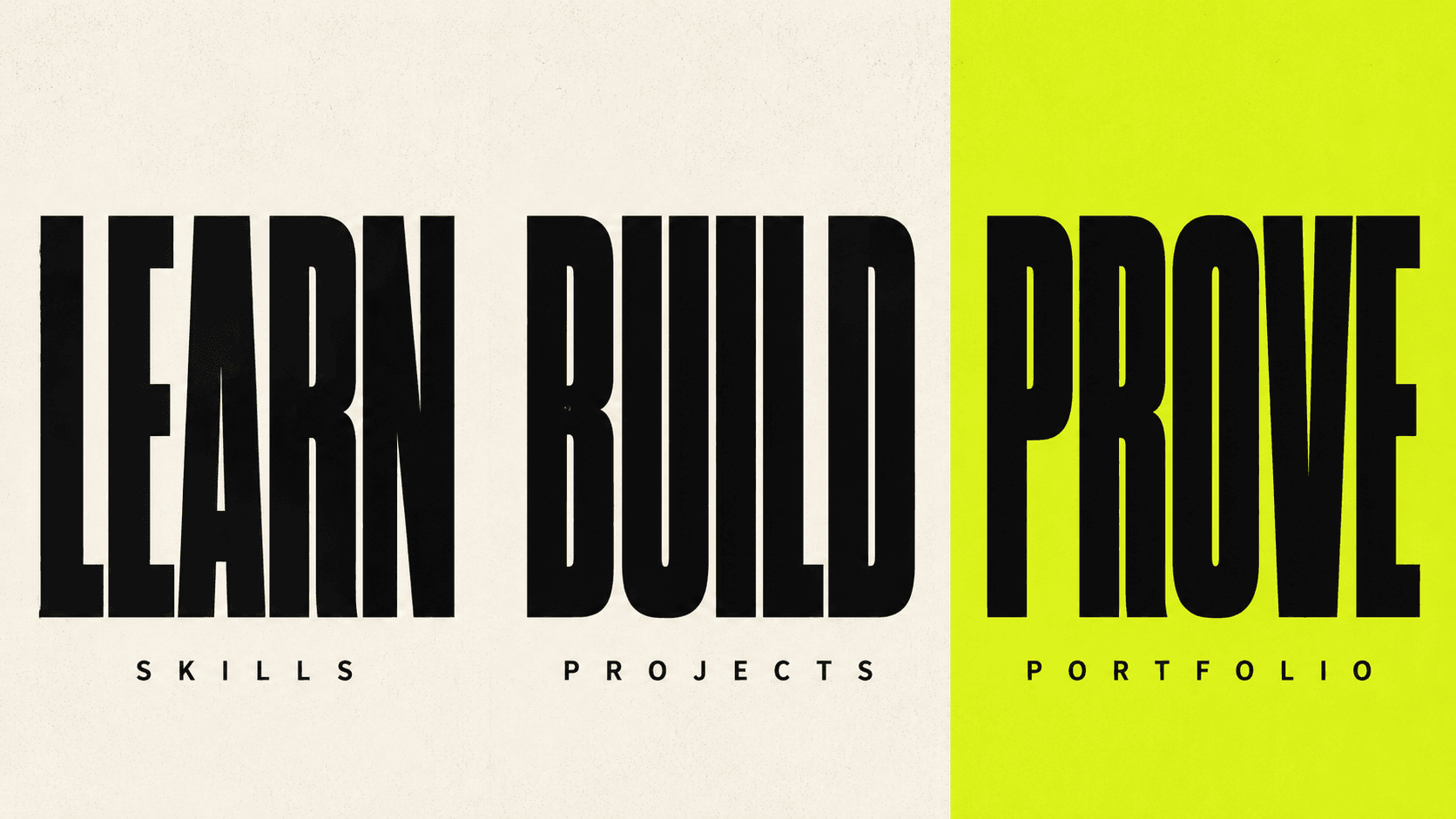
A digital marketing career roadmap should not start with every tool on the internet. It should start with the work employers and clients actually inspect: customer research, SEO visibility, useful content, landing page copy, email follow-up, paid campaign thinking, analytics, and proof of judgment. The 90-day path in The Digital Marketing Blueprint turns those skills into one visible project. In the first month, you learn the marketing system and choose a real site, offer, or brand to improve. In the second month, you build assets: an audit, content plan, landing page, email sequence, and measurement setup. In the third month, you test, improve, and package the work into a case study. The outcome is not a guaranteed job or income claim. The outcome is evidence: work that shows how you think, what you can ship, and how you make marketing decisions.
Key takeaways
- A beginner roadmap works best when it ends in a portfolio case study, not just notes.
- The core skill stack is customer psychology, SEO, content, copy, email, ads, analytics, and AI-assisted workflow.
- The fastest useful project is one real business or site improved through audit, strategy, assets, and measurement.
- $10,000/month is a career direction some marketers work toward, not a guaranteed outcome.
Who this is for
- Complete beginners who want the order of learning to be clear.
- Students and career switchers who need proof before applying.
- Freelancers who want to package one service into a stronger offer.
- Creators or founders who want to learn marketing by improving their own project.
What you will build
- A one-page customer research summary.
- An SEO and AI-visibility audit.
- A landing page outline and 5-email follow-up sequence.
- A measurement checklist and case study page.
Plain-English definitions
- Career roadmap
- A sequence of skills, projects, and proof points that connects learning to a real job, client, or business outcome.
- Portfolio proof
- Finished work that shows your thinking, process, deliverables, and measurement plan.
Start with the system, not the platform
Digital marketing is the work of helping the right people discover something useful, trust it, and take a meaningful action. The platform is only the surface. Search, social, email, ads, and AI tools all fit inside the same system: attention, trust, offer, action, measurement, and improvement.
That is why beginners who chase one tactic after another get stuck. They learn fragments. A career roadmap gives those fragments an order.
- Can you explain who the customer is?
- Can you explain what action the campaign should create?
- Can you show which metric proves the action happened?
- Can you improve the message after looking at the result?
The 90-day plan
The plan below is designed for one visible project. Pick a real local business, creator, ecommerce product, service, or your own brand. Do not switch every week. The project becomes your practice ground.
| Days | Focus | Finished proof |
|---|---|---|
| 1-15 | Customer research, positioning, offer basics | Audience notes and one clear problem statement |
| 16-30 | SEO, search intent, topic clusters | SEO and AI-visibility audit |
| 31-45 | Content and landing page copy | Content plan and landing page outline |
| 46-60 | Email and lead magnet path | 5-email welcome sequence |
| 61-75 | Paid ads and analytics | Small campaign brief and measurement plan |
| 76-90 | AI workflow, improvement, presentation | Portfolio case study |
What to learn first
The best early skills are the ones that transfer across every channel. Learn customer psychology before tools. Learn copy before paid ads. Learn measurement before you spend money. Learn AI as a workflow assistant, not as a substitute for judgment.
- Customer psychology: what people want, fear, compare, and trust.
- SEO and content: how demand shows up in search and questions.
- Copywriting: how to turn attention into action.
- Email: how to build an owned follow-up path.
- Analytics: how to decide what to keep, fix, or stop.
- AI workflows: how to research, draft, review, and improve faster.
Use one project to prove many skills
A portfolio does not need ten fake campaigns. One well-documented project can prove more than a stack of certificates. The trick is to show your thinking in layers: the business context, the customer, the current gaps, your strategy, the assets you created, and what you would measure next.
Choose the project
Pick something real enough to research: a local clinic, cafe, coach, newsletter, ecommerce product, or personal site.
Map the problem
Write what the customer wants, what blocks trust, and what action the business needs.
Build the assets
Create the audit, content plan, landing page, emails, ad brief, and analytics checklist.
Package the proof
Turn everything into a short case study with screenshots, decisions, and next steps.
How The Digital Marketing Blueprint fits
The book is structured in nine parts: foundations, core skills, SEO, social media, email, paid ads, AI workflows, business models, and the 90-day roadmap. The companion Resource Pack gives you the worksheets behind the work.
Read the book in order if you are new. If you already know one channel, use the roadmap to connect that channel to the rest of the system.
What to do after day 90
After the case study is finished, choose one direction for the next 30 days. Apply for jobs using the case study. Pitch one simple freelance offer. Improve your own project. Or repeat the same process for a second niche.
- Update your resume or profile with the project link.
- Send the case study to five people who can give useful feedback.
- Turn one deliverable into a simple paid service offer.
- Write a short article explaining what you learned.
FAQ
Quick answers
Can I learn digital marketing in 90 days?
You can build a strong beginner foundation and a portfolio project in 90 focused days. Mastery takes longer, but 90 days is enough to stop guessing and start showing useful work.
Do I need a degree to follow this roadmap?
No. A degree can help in some hiring contexts, but this roadmap is built around practical skills and finished work that show your thinking.
Should I learn SEO or paid ads first?
Learn the fundamentals first: customer, offer, copy, and measurement. Then learn SEO before paid ads if you have no budget, or paid ads earlier if your project needs fast traffic and you can measure it.
Sources and further reading
- Creating helpful, reliable, people-first contentGoogle Search Central
- Search Engine Optimization Starter GuideGoogle Search Central
- Advertising, Promotions, and Marketing ManagersU.S. Bureau of Labor Statistics