
Course guide
11 Best Digital Marketing Courses Online in 2026
Use this guide to choose an online digital marketing course without getting trapped in certificate collecting. The goal is simple: learn the skill, build proof, and know what to do next.
Direct answer
The best digital marketing course online is the one that matches your next outcome. A complete beginner should start with a broad digital marketing course, then add one deeper track such as SEO, social media, analytics, Google Ads, content, email, or copywriting. Certificates can help, but they are not the real finish line. The useful finish line is a portfolio asset: an SEO audit, content plan, landing page, email sequence, ad test brief, analytics dashboard, or case study. This guide compares 11 course options across Coursera, HubSpot Academy, Google Skillshop, and Udemy-style specialist courses. Use the list to pick one foundation course and one skill course, then pair the learning with The Digital Marketing Blueprint and the free Resource Pack so every lesson becomes something you can show to an employer, client, or your own audience.
Key takeaways
- Do not choose a course only because it has a certificate. Choose it because it helps you build a visible marketing asset.
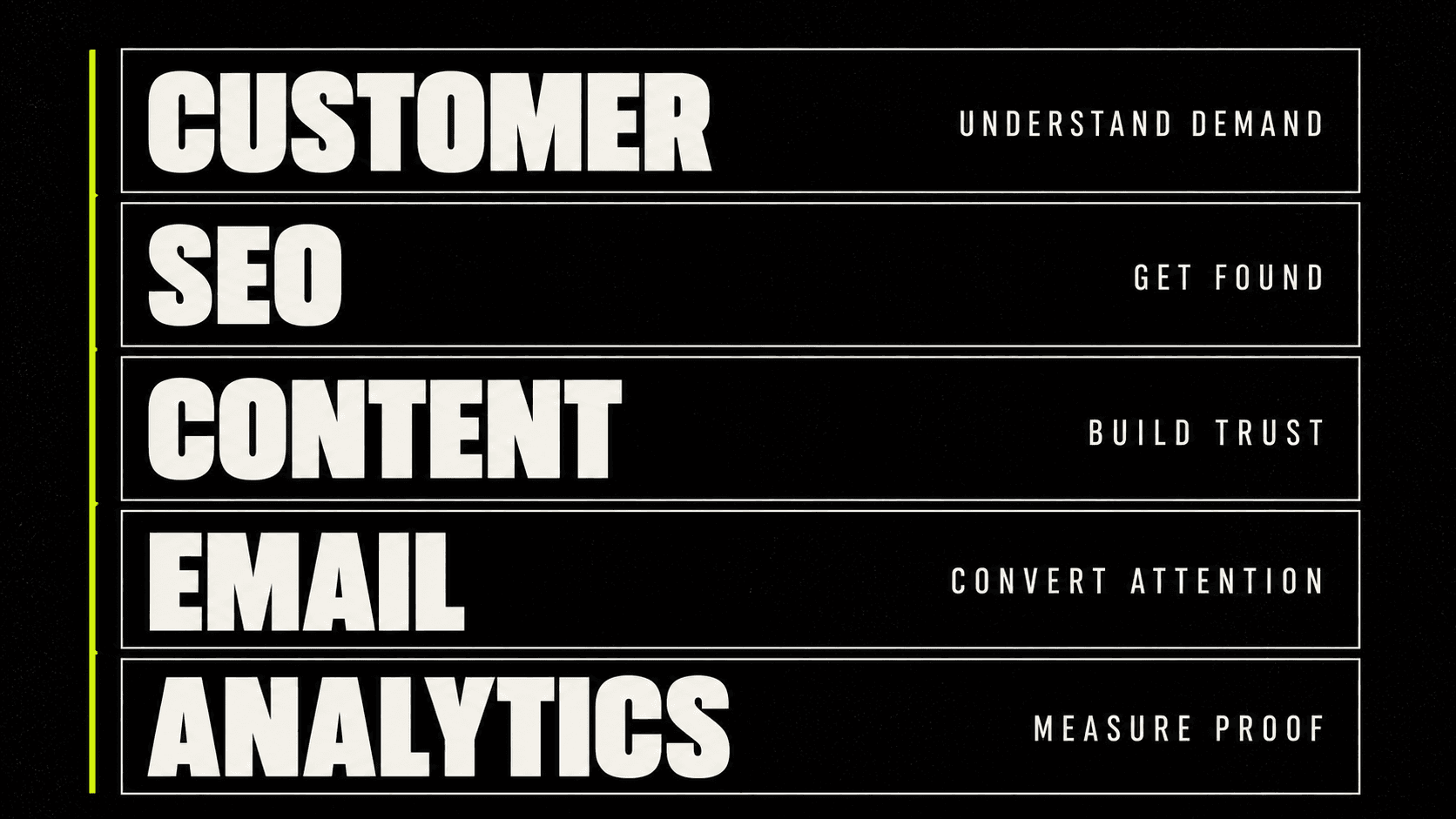
- A beginner path works best in this order: digital marketing foundation, customer research, SEO/content, email/copy, ads, analytics, then portfolio packaging.
- Coursera-style programs are useful for structured learning; HubSpot and Google Skillshop are useful for practical free training; Udemy can be useful for narrow tactical skills.
- One finished case study can be more persuasive than five half-finished certificates.
Who this is for
- Complete beginners choosing their first digital marketing course.
- Students and career switchers who want a job-ready learning path.
- Freelancers who want to package one skill into a paid service.
- Creators and founders who want practical marketing skills for their own project.
What you will build
- A course selection plan based on your goal: job, freelance client, or own brand.
- A one-project portfolio path that turns learning into proof.
- A shortlist of foundation, SEO, social, ads, analytics, and copywriting options.
- A simple buying checklist so you do not waste money on overlapping courses.
Plain-English definitions
- Digital marketing course
- An online training program that teaches one or more marketing skills, such as SEO, content, email, paid ads, analytics, social media, ecommerce, or marketing strategy.
- Portfolio proof
- A finished piece of work that shows how you think and what you can do: an audit, plan, page, email sequence, ad brief, dashboard, or case study.
- Affiliate link
- A tracked link that may pay the publisher a commission if a reader buys through it, usually at no extra cost to the reader.
How to choose a digital marketing course in 2026
Most beginners compare courses by duration, certificate, star rating, or discount. That is understandable, but it is not enough. A better question is: what will this course help me build that someone else can inspect?
Digital marketing changes quickly, but the underlying work is stable. You still need to understand customers, find demand, write offers, create content, build a follow-up path, measure performance, and improve based on evidence. A good course should make one of those jobs clearer.
- Does the course teach a skill you can apply to one real project?
- Does it include examples, templates, assignments, or practical exercises?
- Can you turn the course into a portfolio piece within 30 days?
- Does it teach current platform behavior without pretending platforms never change?
- Does the instructor explain why the tactic works, not only where to click?
The 11-course shortlist
The list below is organized by learning job. Start with one foundation course if you are new. Then choose one specialist course based on your next proof asset: SEO audit, content plan, email path, ad test, analytics report, or social campaign.
Google Digital Marketing & E-commerce Professional Certificate
Best for beginners who want a structured overview of digital marketing and ecommerce before choosing a narrower path. Use it to understand the landscape, then build one project from the lessons.
View the Google certificateMeta Social Media Marketing Professional Certificate
Best for learners who want to understand social content, audience building, campaign setup, and platform-specific execution. Pair it with a 30-day content calendar or social audit.
View the Meta social courseMeta Marketing Analytics Professional Certificate
Best for learners who want to move beyond posting and learn how measurement, reporting, and data-backed decisions work in marketing.
View the Meta analytics courseDigital Marketing Specialization by University of Illinois
Best for learners who want a broader academic-style introduction to digital marketing strategy, channels, and consumer behavior before specializing.
View the specializationMarketing in a Digital World
Best for people who want a conceptual bridge into digital marketing: how digital tools change products, promotion, pricing, distribution, and customer behavior.
View the courseSearch Engine Optimization SEO Specialization by UC Davis
Best for learners who want to build search skills and turn them into visible proof: keyword research, on-page improvements, content planning, and technical checks.
View the SEO specializationHubSpot Academy Digital Marketing Course
A useful free option for learning inbound marketing, content, lead generation, and practical digital marketing fundamentals before buying anything.
View the HubSpot courseGoogle Skillshop
Best for free official training around Google advertising and platform workflows. Use it when your portfolio project includes search ads or measurement setup.
View Google SkillshopUdemy digital marketing course
Best when you want a lower-cost, tactical overview and can judge the curriculum carefully. Check the latest update date, instructor credibility, and assignments before buying.
View the Udemy courseUdemy SEO course
Best when you want a focused SEO walkthrough. Choose this if your next portfolio asset is an SEO audit, keyword map, content brief, or technical checklist.
View the Udemy SEO courseUdemy copywriting, email, or content course
Best when your weak point is writing: landing pages, email sequences, ad angles, hooks, and offers. Turn the course into one rewritten page and one email path.
View the Udemy writing courseThe best learning order for beginners
If you are starting from zero, do not open all 11 courses. That creates noise. Pick one foundation course, one specialist skill, and one project. The order below keeps the learning connected to practical proof.
| Stage | Learn | Build |
|---|---|---|
| 1 | Digital marketing foundation | One-page map of the customer, offer, channel, and desired action |
| 2 | SEO and content | SEO audit, keyword map, and content brief |
| 3 | Copy and email | Landing page rewrite and 5-email welcome sequence |
| 4 | Ads and analytics | Small campaign brief, budget, tracking plan, and result dashboard |
| 5 | Portfolio packaging | Case study that explains the problem, work, decisions, and next test |
Best course by goal
The best course depends on what you want to prove next. A career switcher, freelancer, and creator should not always choose the same path.
| Your goal | Start with | Then build |
|---|---|---|
| Get a first marketing job | Google Digital Marketing & E-commerce or HubSpot Academy | A portfolio case study with audit, page, emails, and measurement |
| Become an SEO specialist | UC Davis SEO Specialization or a focused Udemy SEO course | An SEO and AI visibility audit for a real website |
| Work in social media | Meta Social Media Marketing Professional Certificate | A 30-day content calendar and campaign analysis |
| Improve paid media skills | Google Skillshop plus analytics training | A search campaign brief and conversion tracking checklist |
| Freelance faster | One foundation course plus copy/email practice | A productized offer, landing page, outreach email, and sample audit |
What to build while taking the course
Courses become valuable when you convert lessons into assets. Do not wait until the final module. After every useful lesson, ask: what can I make from this that proves I understood it?
- Turn customer research lessons into a buyer-problem note.
- Turn SEO lessons into a keyword map and page audit.
- Turn content lessons into a 30-day content plan.
- Turn copy lessons into one landing page rewrite.
- Turn email lessons into a 5-email sequence.
- Turn ad lessons into a campaign brief with budget, audience, creative, and success metric.
- Turn analytics lessons into a dashboard and plain-English insight summary.
How the courses pair with The Digital Marketing Blueprint
Courses teach modules. The Digital Marketing Blueprint gives those modules a working order. The book connects customer psychology, SEO, content, copy, email, ads, analytics, AI workflows, freelancing, and portfolio proof into one 90-day path.
That matters because course platforms can make you feel productive while you are still not shipping anything. The book and Resource Pack are designed to keep you building: audits, briefs, pages, emails, campaign plans, dashboards, pricing sheets, and case studies.
- Use a course for structured teaching.
- Use the book for the full marketing system and career path.
- Use the Resource Pack to turn the lesson into a finished asset.
- Use the case study template to show the work to employers, clients, or your own audience.
Buying checklist before you choose a paid course
A discount is not a strategy. Before buying any course, especially through an affiliate link, check the fit carefully.
- Read the current curriculum, not only the sales headline.
- Check when the course was last updated.
- Confirm whether the instructor has practical marketing experience.
- Look for assignments, examples, projects, or templates.
- Check whether the course covers your actual next goal.
- Do not buy three overlapping beginner courses. Finish one and build proof.
- Read the platform's current pricing, refund, and certificate details before purchase.
A simple 30-day course-to-portfolio plan
If you want the fastest useful path, choose one course and one project. Then use the structure below.
Week 1: Pick the project
Choose a real site, creator, local business, product, or your own brand. Write the audience, offer, and action you want to improve.
Week 2: Build the first asset
Create an SEO audit, content plan, landing page rewrite, or email sequence from the course lessons.
Week 3: Add measurement
Decide what success would mean: traffic, clicks, signups, replies, leads, or sales conversations. Build the tracking plan.
Week 4: Package the proof
Write the case study: problem, research, assets created, decisions made, metrics to watch, and next experiment.
FAQ
Quick answers
Which digital marketing course should I take first?
If you are a complete beginner, start with a broad foundation course such as Google Digital Marketing & E-commerce, HubSpot Academy's Digital Marketing Course, or another structured beginner program. Then choose one specialist path: SEO, social media, ads, email, analytics, or copywriting.
Are digital marketing certificates enough to get hired?
Certificates can help show initiative, but they are not enough by themselves. Employers and clients care about proof: audits, pages, campaigns, emails, dashboards, case studies, and your ability to explain decisions.
Are the course links on this page affiliate links?
Some are affiliate links, especially several Coursera and Udemy links. If you buy through them, the site may earn a commission at no extra cost to you. Free resources such as HubSpot Academy and Google Skillshop are included because they are useful, not because every link is paid.
Should I buy a course or read a book first?
Use both for different jobs. A course is useful for guided lessons and platform walkthroughs. A book is useful for the system, judgment, and order of work. The strongest path is to learn one lesson and immediately build one asset.
Can a course help me earn $10,000 a month?
No course can guarantee income. High marketing income usually comes from skill, proof, positioning, client selection, communication, sales, timing, and market demand. Treat courses as training inputs, not income promises.
Sources and further reading
- Google Digital Marketing & E-commerce Professional CertificateCoursera
- Meta Social Media Marketing Professional CertificateCoursera
- Meta Marketing Analytics Professional CertificateCoursera
- Digital Marketing SpecializationCoursera
- Marketing in a Digital WorldCoursera
- Search Engine Optimization SEO SpecializationCoursera
- Digital Marketing CourseHubSpot Academy
- Google SkillshopGoogle
- Disclosures 101 for Social Media InfluencersFederal Trade Commission
- Creating helpful, reliable, people-first contentGoogle Search Central