
AI-era SEO
SEO and AI Content Workflow: Rank, Get Cited, and Stay Human
Search is changing, but helpful pages still win by answering real questions with evidence, structure, and human judgment.
Direct answer
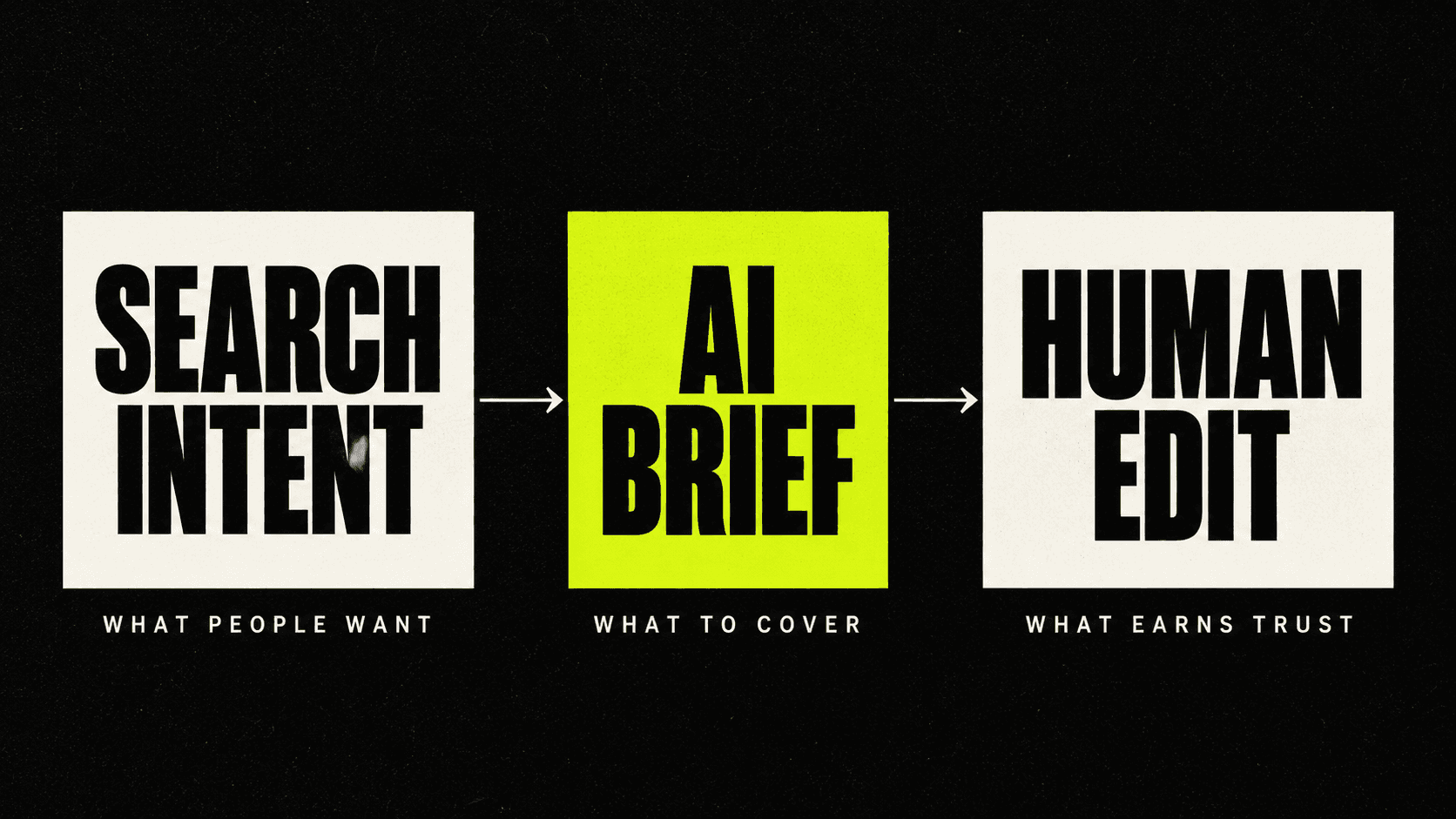
An SEO and AI content workflow should combine search intent, machine-assisted research, and human editorial judgment. Start by identifying the query and the real problem behind it. Study the search results, related questions, forums, customer language, and competitor gaps. Use AI to organize that research into a brief, but do not let AI invent the facts or the point of view. Then write a page that directly answers the main query, explains the topic in plain English, includes original examples, links to useful internal pages, cites trustworthy sources, and gives the reader a next action. Finally, measure impressions, clicks, engagement, conversions, and updates needed. The goal is not to trick search engines or AI assistants. The goal is to publish useful, accurate, well-structured content that people and machines can understand.
Key takeaways
- AI can accelerate briefs and drafts, but human judgment must own accuracy and usefulness.
- Search intent, original examples, and internal links make pages easier to understand.
- LLM-readable pages need direct answers, definitions, source context, and clear entity facts.
- Helpful content beats generic AI volume.
Who this is for
- Marketers building SEO content in the AI era.
- Bloggers and founders who want content that is useful and citeable.
- Freelancers creating content briefs for clients.
- Beginners learning how search and AI visibility connect.
What you will build
- A search intent map.
- An AI-assisted content brief.
- A human-edited long-form page.
- A content update and measurement checklist.
Plain-English definitions
- AI visibility
- The chance that AI search tools and assistants can understand, summarize, cite, or recommend your page when it is relevant.
- Content brief
- A structured plan for a page: query, audience, intent, outline, examples, sources, internal links, and success metric.
The workflow in one view
| Stage | What you do | What AI can help with |
|---|---|---|
| Intent | Define the query and the job behind it | Cluster questions and summarize patterns |
| Research | Read SERPs, forums, reviews, docs, and competitors | Extract repeated pain points |
| Brief | Set angle, outline, sources, internal links | Draft a structured first brief |
| Write | Answer directly, teach clearly, add examples | Generate options and rough passages |
| Edit | Check truth, specificity, voice, and usefulness | Flag weak claims and missing sections |
| Measure | Track clicks, conversions, and update needs | Summarize performance notes |
Start with the real intent
A keyword is not the goal. It is a clue. Someone searching “learn digital marketing from scratch” may be asking what to learn first, whether a degree is needed, how long it takes, or how to avoid wasting money.
Write those hidden questions before writing the article. The best page answers the obvious query and the quiet objections.
- What is the person trying to do?
- What do they already believe?
- What are they afraid of wasting?
- What proof would make the answer believable?
Use AI for briefs, not blind publishing
Google’s AI-content guidance is not a permission slip for generic pages. It says content should be helpful, reliable, and people-first. That means a marketer still needs original examples, source checks, and editorial accountability.
Ask AI to organize your notes, not replace the notes. Feed it customer language, source excerpts, product facts, and internal page context.
Make the page easy for humans and LLMs to extract
- Put a 120-180 word direct answer near the top.
- Use plain-English definitions for core terms.
- Add tables for frameworks, comparisons, and steps.
- Use descriptive headings that stand alone.
- Cite official or primary sources where claims depend on external facts.
- Add internal links to related pages with descriptive anchor text.
What to measure after publishing
SEO content is not finished when it is published. It becomes a working asset. Track impressions, clicks, click-through rate, queries, conversions, scroll depth, and replies or leads generated.
Do not update only for rankings. Update when new questions appear, platforms change, examples become stale, or readers need a clearer next step.
- Search Console query movement.
- Internal clicks to product or resource pages.
- Email signups or book clicks.
- Reader questions that reveal missing sections.
- Source freshness and changed platform rules.
How the book teaches this
The Digital Marketing Blueprint covers SEO, entity SEO, AI SEO, content strategy, AI workflows, and measurement as one connected system. The Resource Pack includes the practical checklists and brief templates for turning those chapters into pages.
FAQ
Quick answers
Can AI-written content rank?
AI-assisted content can perform if it is helpful, accurate, original, and people-first. Generic content produced only to scale pages is risky and usually weak for readers.
What makes content LLM-readable?
Clear entity facts, direct answers, definitions, structured sections, internal links, citations, and concise summaries all make a page easier for AI systems to understand.
Should every article have schema?
Schema does not guarantee rankings, but Article, BreadcrumbList, FAQPage, and Product/Book schema can help search systems understand the page more clearly when used accurately.
Sources and further reading
- Creating helpful, reliable, people-first contentGoogle Search Central
- Search Engine Optimization Starter GuideGoogle Search Central
- Google Search guidance about AI-generated contentGoogle Search Central Blog
- Introduction to structured data markup in Google SearchGoogle Search Central